Ireland's Presidency of the Council of the EU Building a competitive, secure, values-led Europe
From 1 July to 31 December 2026, Ireland will assume the Presidency of the Council of the European Union for the eighth time since joining the European Community in 1973.
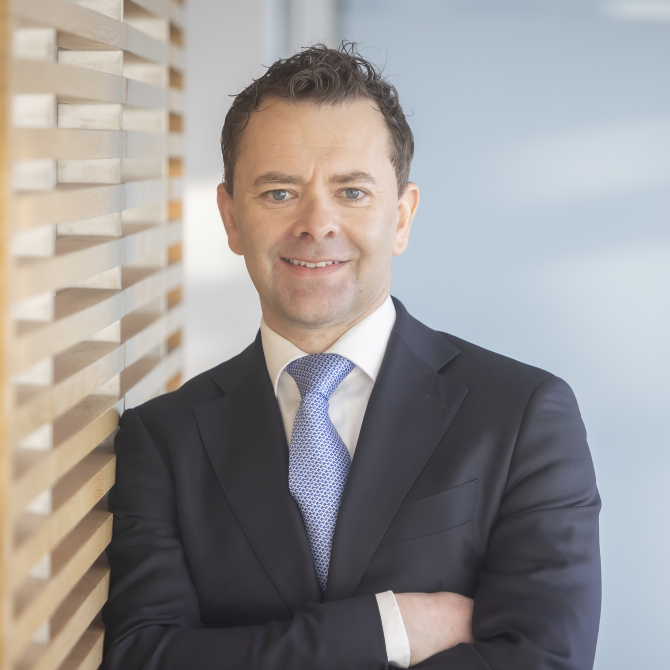
Ireland’s Presidency creates genuine proximity to European decision-making. The value lies in understanding how outcomes are shaped, not just monitoring them. That’s where Matheson makes the difference.
Ireland’s Presidency of the Council of the European Union arrives at a critical juncture for Europe.
During this six-month period, Irish ministers and officials will chair the majority of Council of Ministers meetings, steer the EU’s policy agenda, and represent the Council of the European Union in negotiations with other EU institutions, particularly the European Parliament.
The continent faces unprecedented geopolitical challenges, economic transformation, and an urgent need to strengthen its strategic autonomy. Ireland’s role in shaping the EU’s response to these issues will have far-reaching implications across sectors and borders.
For businesses operating in and through Ireland, Ireland’s Presidency of the Council of the European Union (“Presidency”) will influence key regulatory and legislative developments. As Ireland’s leading law firm, Matheson is uniquely positioned to guide clients through these changes and identify emerging opportunities during this pivotal period.
What we know about the Presidency themes
The Presidency will be organised around three interconnected themes, mirroring the Strategic Agenda 2024 – 2029 endorsed by EU leaders in late 2024:
- strengthening economic competitiveness.
- enhancing collective security; and
- upholding European values.
Minister McEntee, in a recent speech, characterised these as mutually reinforcing priorities, noting that prosperity requires security, sustainable societies depend on competitive economies, and both rest on a foundation of shared values. The Irish Government will announce its formal priorities in June 2026.

Ireland will guide negotiations and broker agreements between Member States on EU laws and policies that will shape the regulatory environment for years to come.
Over the coming months, Matheson will publish detailed analyses of individual omnibus packages, specific legislative files, and emerging dossiers as they develop under Ireland’s stewardship.
Stay Updated
Video Briefings
Roadmap for Ireland’s EU Presidency
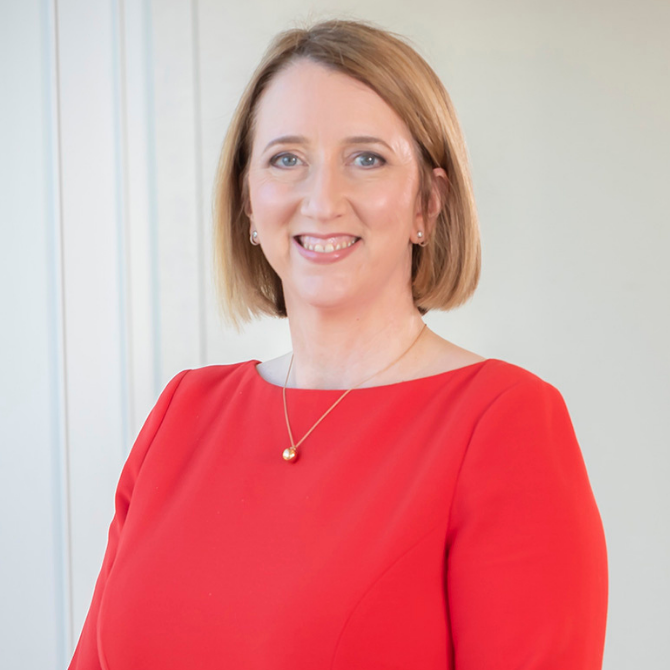
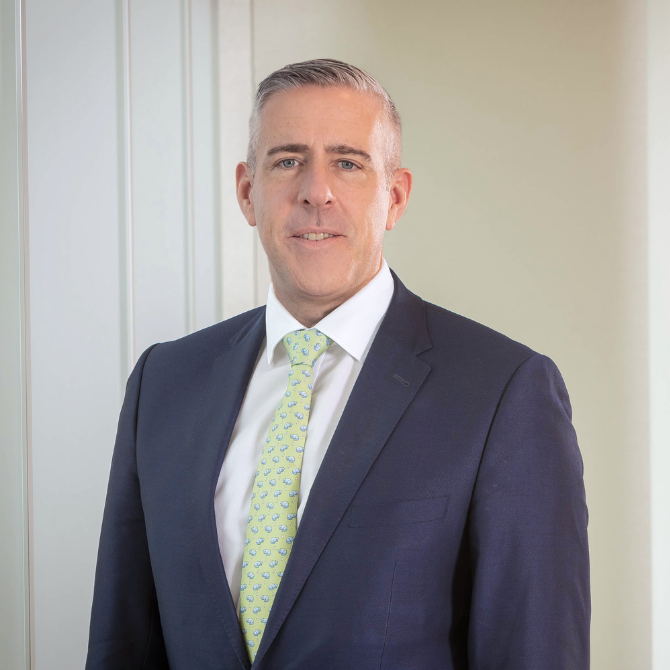
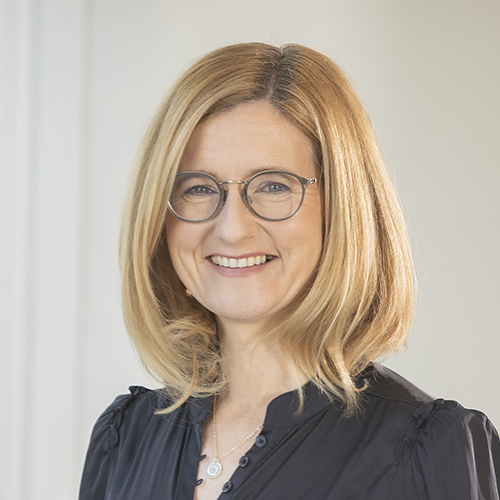
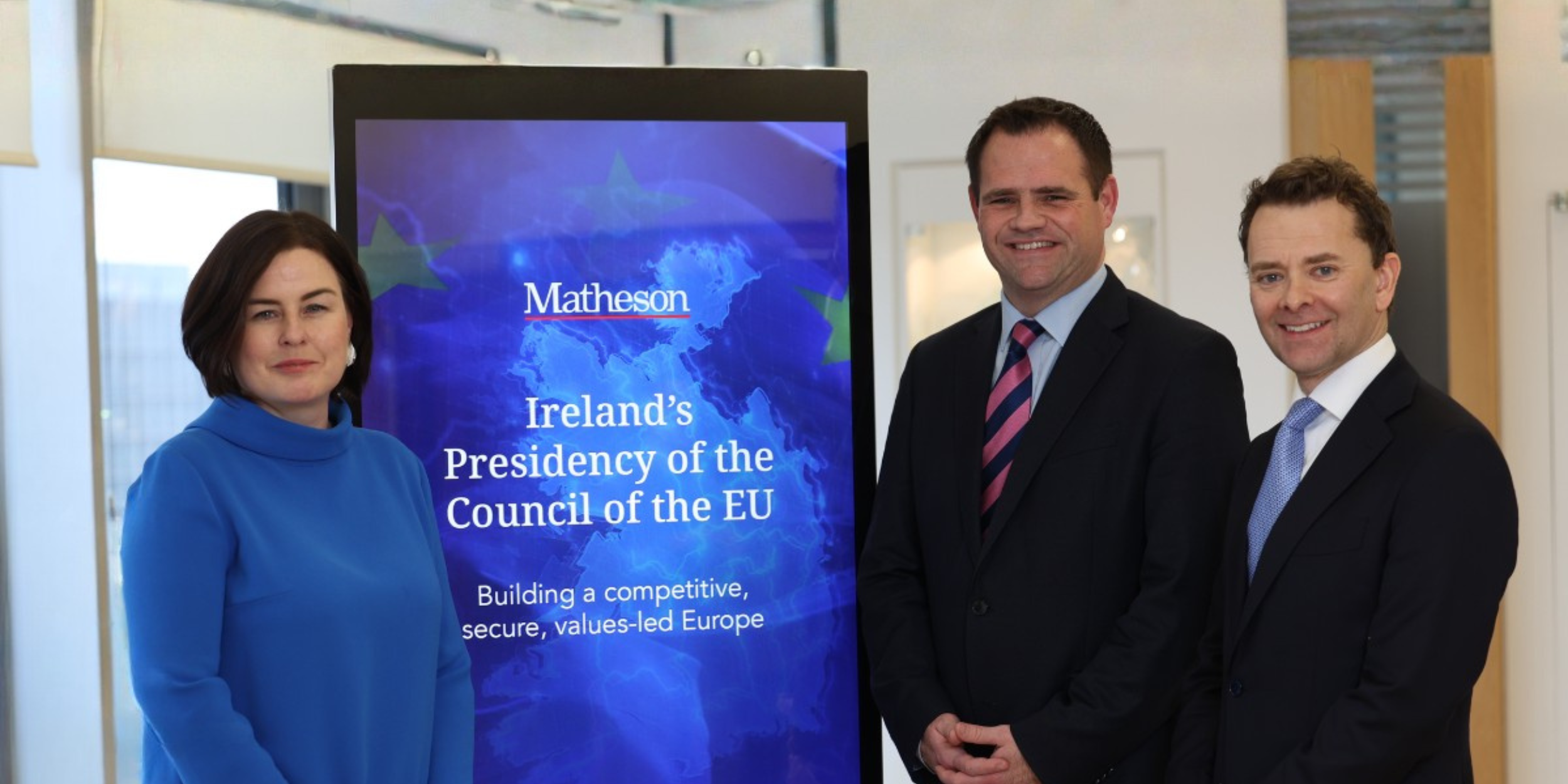
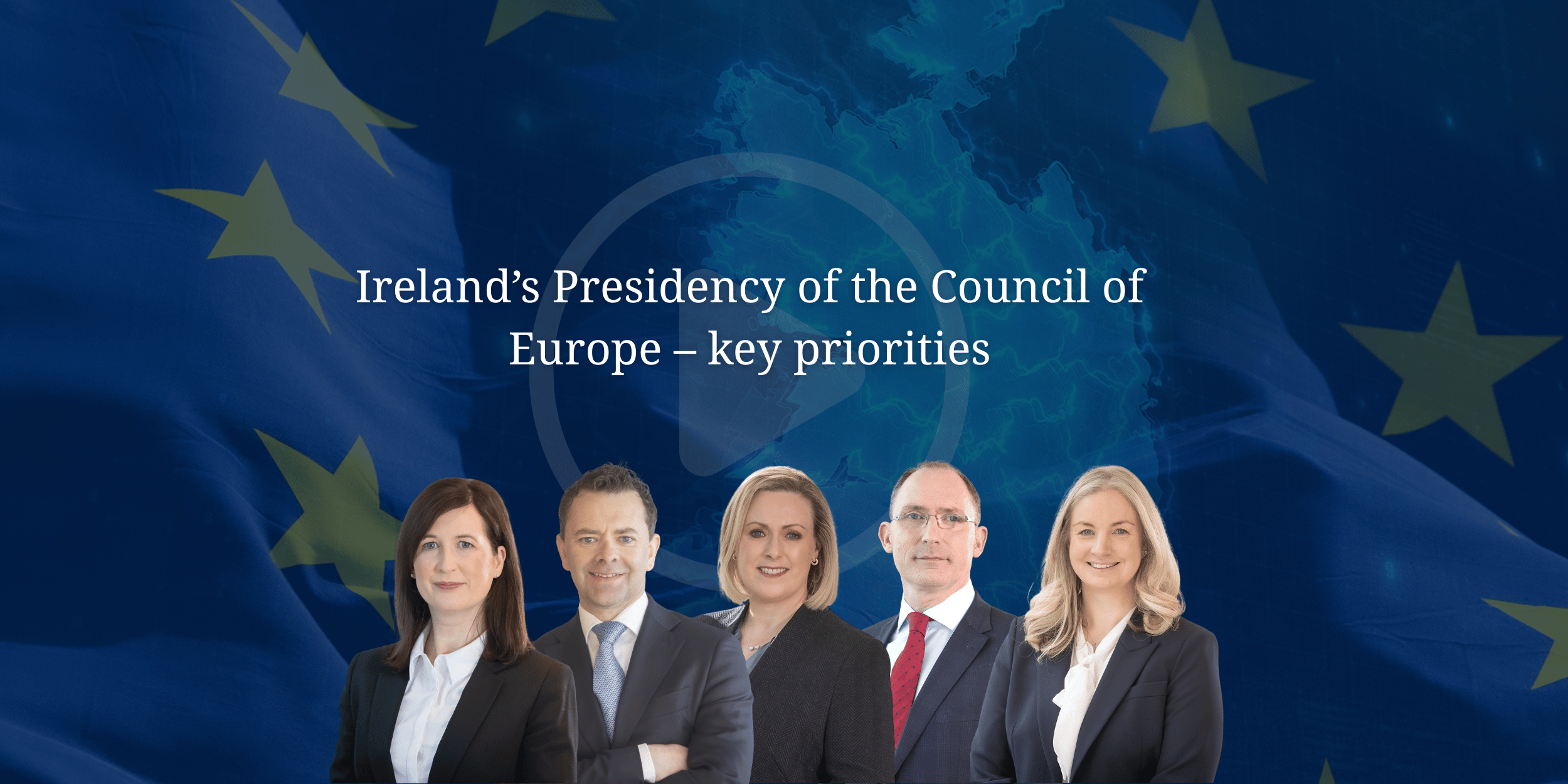
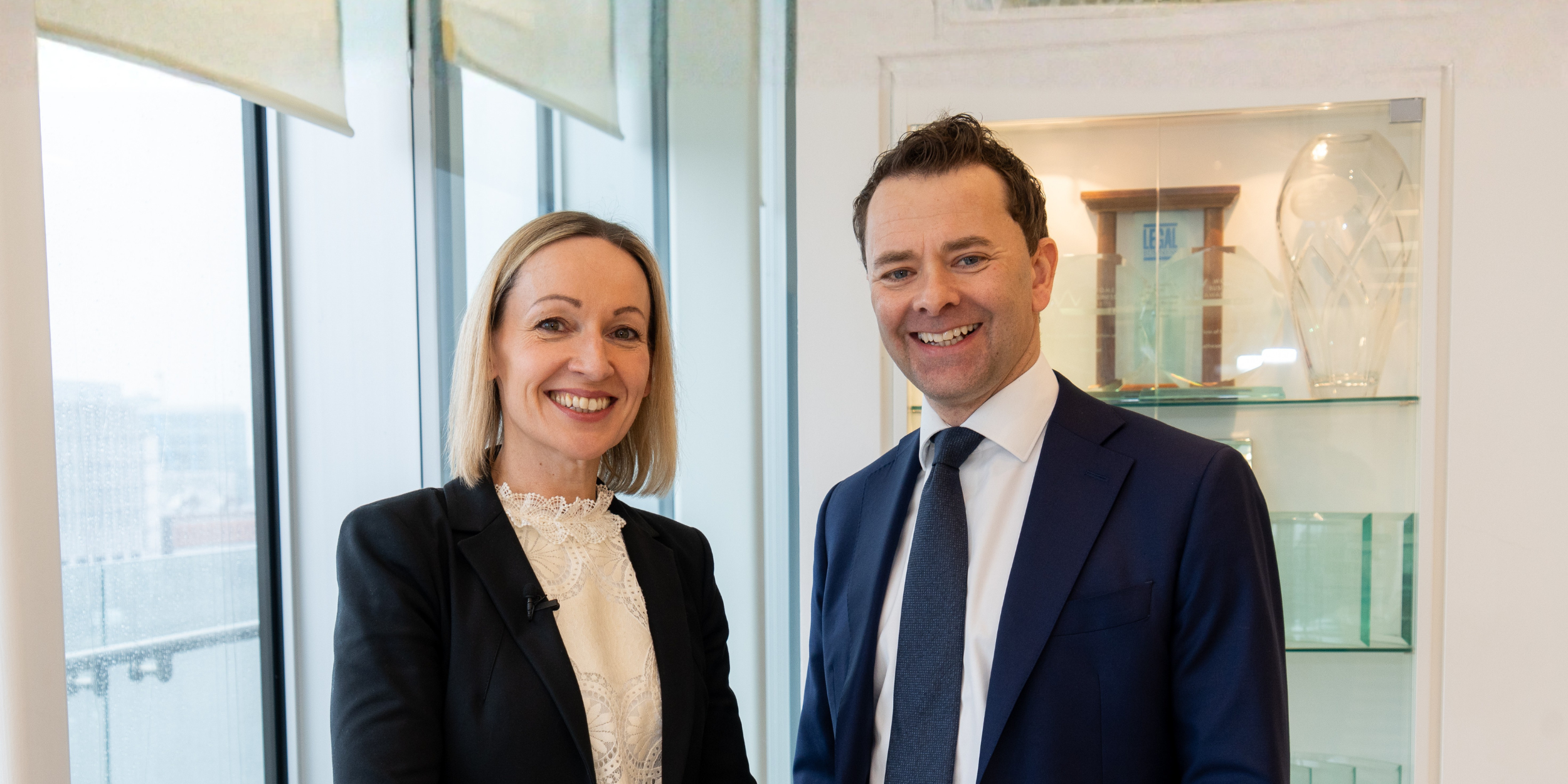
In our latest video, Minister Neale Richmond TD and Matheson’s Tara Doyle, Olivia Long and Claire Scannell, outline the EU Presidency roadmap and implications for business strategy.
Frequently Asked Questions
The Presidency rotates between all EU member states on a six-monthly cycle, meaning each country assumes the role approximately once every thirteen years. No election takes place – the sequence is predetermined, ensuring every member state, regardless of size, exercises this function.
What is the ‘trio’ system?
Since the Lisbon Treaty reforms in 2009, member states work in consecutive groups of three – known as ‘trios’ – to coordinate priorities across an 18-month period. Ireland forms part of the Lithuania Greece trio, developing a shared programme whilst each country leads for its respective six months.
What does the Presidency do?
The Presidency performs two core functions: chairing Council meetings and negotiations across all policy areas, and leading Council engagement with the European Commission and Parliament, steering ‘trilogue’ negotiations and other mechanisms designed to reconcile different institutional positions on proposed legislation.
How many meetings will Ireland chair?
Current planning indicates approximately 274 scheduled gatherings during the six-month term across different Council configurations (excluding the Foreign Affairs Council, which has its own arrangements) and preparatory bodies, from the Permanent Representatives Committee (Coreper) down to specialist working groups.
Does Ireland chair everything?
No. The Foreign Affairs Council has its own High Representative who chairs those meetings. Additionally, the permanent European Council President (currently António Costa) chairs summit meetings of EU heads of state and government.
How is the success of a Presidency measured?
The Presidency drives legislative progress by brokering compromises between member states. Success is measured by the Presidency’s ability to navigate competing national interests and secure agreement on pending legislative files. This requires maintaining neutrality and building consensus across diverse positions.
What did Ireland achieve in previous presidencies?
Since joining the then-European Economic Community in 1973, Ireland has held the Council Presidency six times, each reflecting distinct European challenges and priorities.
1975- First Presidency: Just two years after accession, Ireland hosted the inaugural formal European Council gathering in Dublin, bringing together heads of state and government.
1979- Democratic Expansion: Ireland’s second Presidency coincided with the first direct elections to the European Parliament. Irish voters elected 15 MEPs as European citizens gained direct representation for the first time.
1984- Humanitarian Response: The third Irish Presidency secured agreement on substantial humanitarian assistance for Africa, with member states committing additional resources including significant grain supplies.
1990- German Reunification: Ireland’s fourth term centred on managing German unification. Dublin hosted crucial discussions where member states aligned on an approach to integrate the former East Germany into the Union.
1996- Monetary Union: The fifth Presidency advanced key elements of European monetary integration, including legal frameworks and exchange rate mechanisms for the single currency.
2004-Historic Enlargement Ireland’s Presidency in 2004 oversaw the Union’s largest single expansion, welcoming ten new member states on what became known as ‘The Day of Welcomes’.
What about Ireland’s 2013 Presidency?
Ireland marked the 40th anniversary of its EU membership on 1 January 2013, the same date on which it assumed its seventh Presidency of the Council of the European Union under Taoiseach Enda Kenny’s leadership.
The Presidency focused on three core themes: Stability, Jobs and Growth. During this six-month period, Ireland facilitated several significant agreements, including:
- The seven-year €960 billion EU Budget (Multiannual Financial Framework);
- The establishment of a single banking sector supervisor;
- A €16 billion budget allocation for the Erasmus for All programme, covering education, training, youth and sport;
- The 7th Environmental Action Programme;
- Reform of both the Common Agricultural Policy and the Common Fisheries Policy; and
- A negotiating mandate for the EU-US Transatlantic Trade and Investment Partnership (TTIP).
These achievements demonstrated Ireland’s capacity to broker consensus on major policy initiatives during a pivotal period for the European Union.
What is Ireland’s reputation as Presidency holder?
Ireland has consistently demonstrated capability in facilitating agreement during pivotal European moments, building consensus across diverse national positions.
1. Advancing European values on the global stage
Ireland intends to emphasise the EU’s role as a defender of democratic principles, fundamental rights, and international legal frameworks. Specific areas of concentration include:
Supporting Ukraine
Continued political, financial, and humanitarian assistance to Ukraine, including support for its membership application. Ireland will maintain pressure on Russia through additional sanctions and measures targeting circumvention of existing restrictions.
Promoting peace in the Middle East
Expansion of humanitarian relief to Gaza, with Dublin hosting international discussions on pathways to a two-state settlement. Minister McEntee recently visited the Rafah Crossing and emphasised the need to substantially increase aid flows.
Championing human rights
Resistance to erosion of international standards on gender equality and minority rights. This commitment is reflected in Ireland’s current campaign for a seat on the UN Human Rights Council.
Driving EU expansion
Acceleration of membership negotiations with Ukraine and Moldova, which have satisfied technical requirements for progression. Ireland also seeks to advance applications from Montenegro and Albania where conditions permit.
Protecting democratic standards
Collaboration with EU partners and institutions to counter threats to rule of law within member states.
2. Strengthening European security
Acknowledging the changed threat environment stemming from Russia’s war against Ukraine, Ireland will pursue enhanced security cooperation:
Defence collaboration
Engagement with the White Paper on European Defence to develop collective capabilities whilst maintaining Ireland’s traditional position on military neutrality. Domestic defence expenditure has reached unprecedented levels, reflecting the Government’s commitment to improved capabilities.
Countering emerging threats
Coordinated responses to hybrid warfare, cyberattacks, and other evolving security challenges.
Internal security cooperation
Enhanced collaboration through Justice and Home Affairs mechanisms to combat transnational crime, online exploitation of children, and gender-based violence.
Migration management
Implementation of the recently agreed Asylum and Migration Pact, complemented by development assistance aimed at addressing underlying drivers of irregular migration.
3. Boosting European competitiveness
Ireland will advocate for measures to reinvigorate Europe’s economic performance and maintain global competitiveness:
Energy and supply chains
Faster rollout of renewable energy infrastructure to reduce import dependency and lower costs for consumers and businesses. Diversification of procurement for critical materials to build supply chain resilience.
Capital markets and business environment
Development of the Savings and Investment Union to improve access to finance, particularly for small and medium-sized enterprises seeking to scale across borders.
Promotion of Ireland’s proposal for a unified European company law regime, which would eliminate the need for businesses to navigate multiple national registration systems.
Regulatory simplification
Pursuit of the EU’s regulatory streamlining agenda to reduce compliance burdens on businesses, especially SMEs, whilst preserving robust standards for environmental protection and public health.
Investment in research and development to maintain Europe’s position in emerging technologies and scientific advancement.
Public Consultation Process
The Irish Government launched a public consultation on 5 November 2025, which closed on 12 December 2025, seeking views from domestic stakeholders and the Irish public on the development of Ireland’s Presidency priorities and policy programme. The open call for submissions received 484 responses through the consultation on gov.ie.
The views received will provide invaluable input to the development of the Presidency policy programme, which will be developed and refined in the coming months prior to publication in June 2026.
Key Events
The six-month term will involve substantial operational responsibilities:
- Ministerial chairing of formal Council sessions across policy areas;
- Irish official leadership of approximately 180 preparatory working groups;
- Negotiation with the European Parliament on pending legislation; and
- Representation of the EU in multilateral forums on climate, biodiversity, and other global issues.
Ireland will host over 270 events domestically, headlined by a European Political Community summit bringing together leaders from 47 nations—the largest gathering of its kind on Irish soil.
Additional events include informal sessions of the European Council and ministerial meetings across policy portfolios.